Start with the compact central route
For a first visit, spend the morning around Ala-Too Square and the National History Museum, then walk through Oak Park and along Erkindik Boulevard after lunch. This gives you Bishkek’s civic centre, a substantial look at Kyrgyz history and the leafy public spaces that make the capital different from a checklist of monuments.
Allow 45–60 minutes for the square route, 90–120 minutes for the History Museum, an unhurried lunch and 60–90 minutes for Oak Park and Erkindik. Put the Fine Arts Museum in this slot instead when visual culture matters more to you; save Victory Square, Frunze House Museum and the market for a second or third city day.
Read Bishkek through Ala-Too Square and Old Square
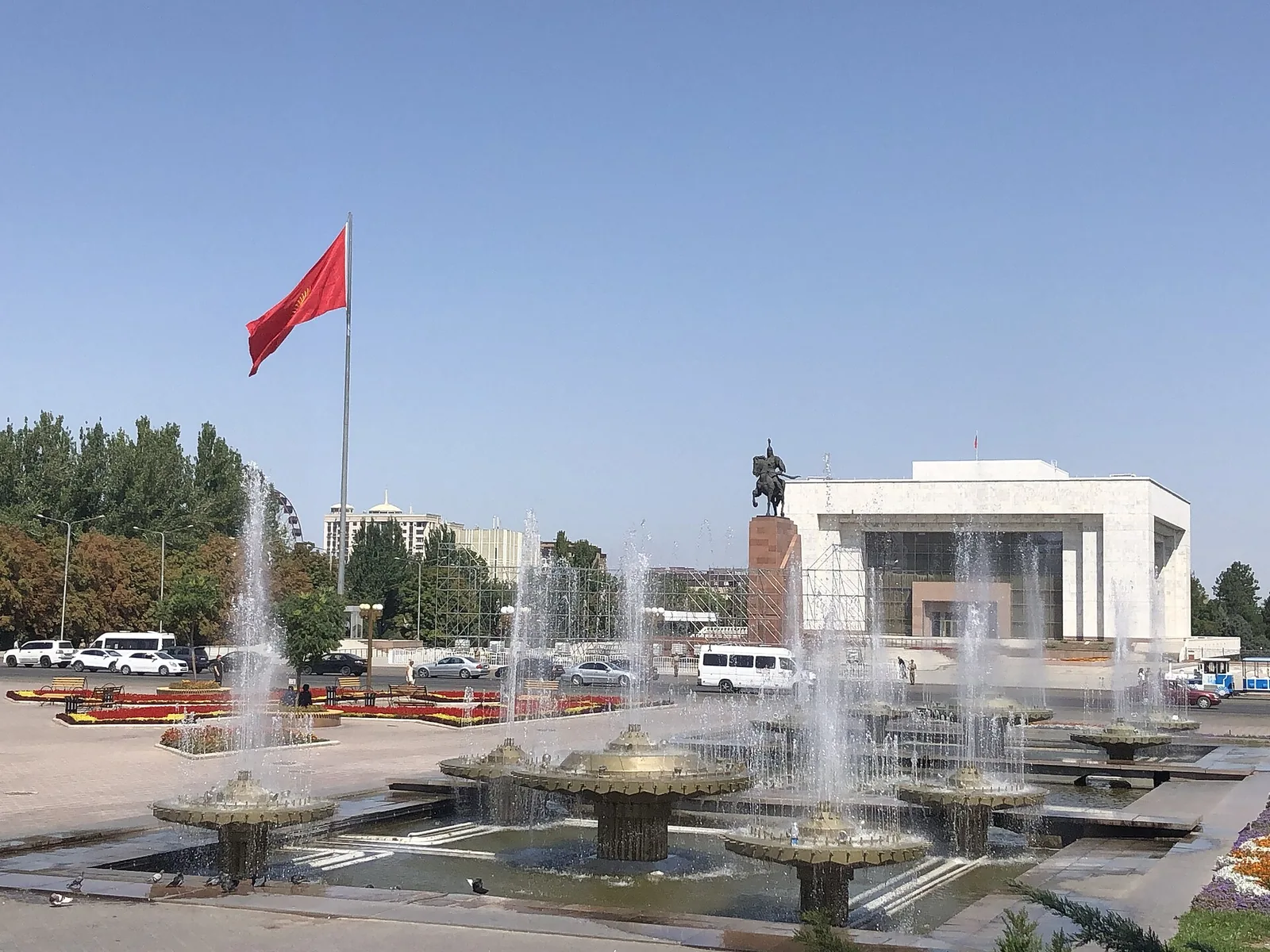
Begin at Ala-Too Square and walk its perimeter before entering a museum. The Manas statue, the tall national flagpole and the formal government façades give you the visible orientation points; the National History Museum forms the natural indoor continuation of the square route. Behind the museum, Old Square and its Lenin statue show a different layer of the capital’s public history.
A short, useful circuit is Ala-Too Square → the museum frontage → Old Square → back across the civic centre. Allow 45–60 minutes for the public spaces, then use the museum as your main indoor stop. A ceremony or street event can change access on the day, but it does not need to determine your route.
Choose the National History Museum for the country’s story
The National History Museum at 203 Chuy Avenue is the best first indoor stop when you want the rest of Kyrgyzstan to make sense. Its permanent exhibition follows cultural history from the Stone Age to the present. The most useful anchors are visual: a yurt installation with horse replicas, a staged Manas Epic scene, and cave and historical-cell reconstructions that make nomadic life, the national epic and later history tangible rather than a list of dates.
Allow 1½–2 hours: follow the historical sequence, pause at the yurt and Manas displays, then explore the media stations. More than 40 were produced in Kyrgyz, Russian and English, including a Manas Epic atrium projection and interactive tables. Use the English media for context and a translation app for labels you want to read more closely. The municipal listing gives Tuesday–Sunday, 10:00–18:00; adult ticket examples start at 110 KGS by category.
Pair Oak Park with an Erkindik Boulevard walk
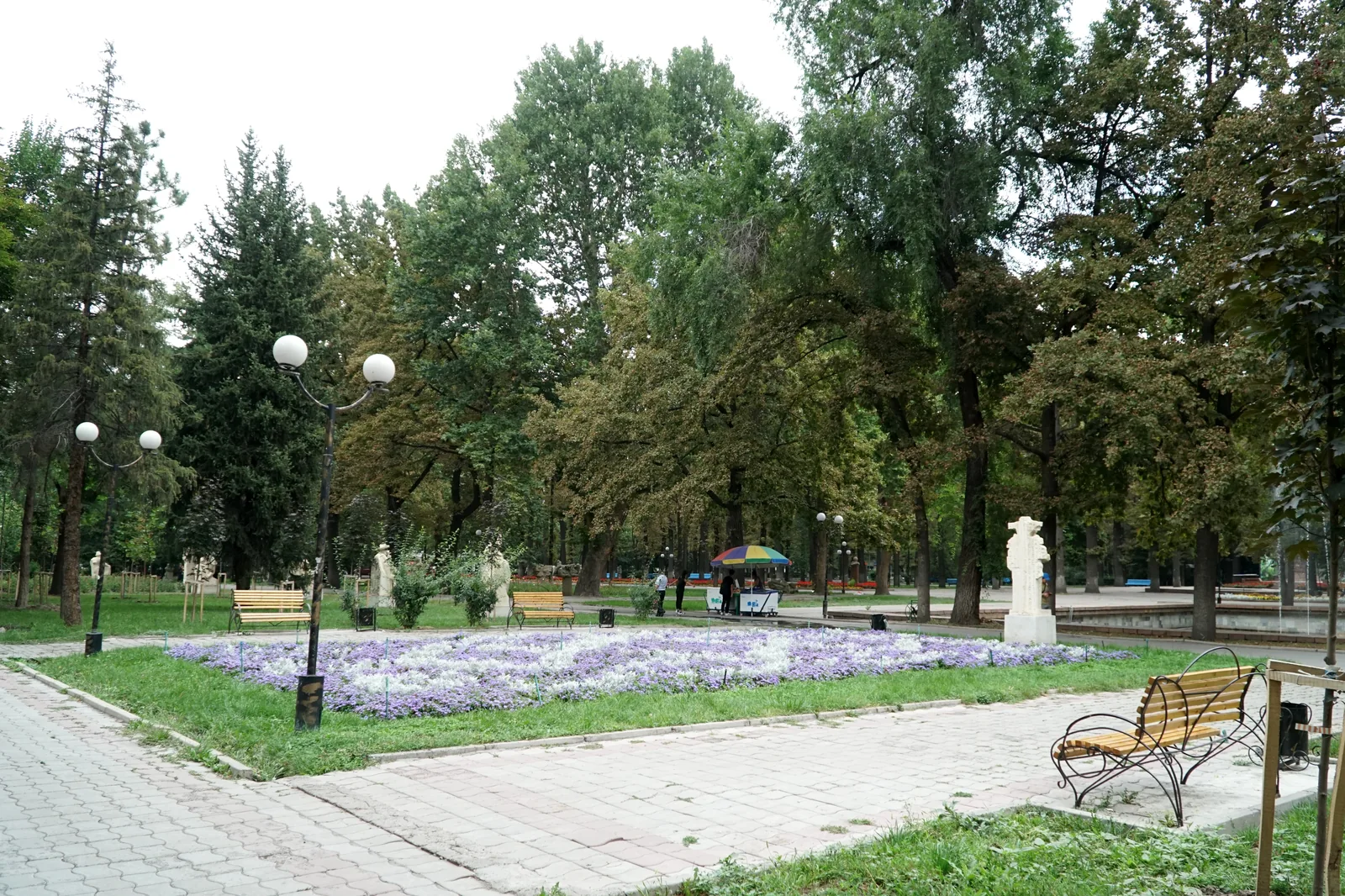
Oak Park, now also named Chingiz Aitmatov Park on municipal pages, is the best pause after a museum. It is one of Bishkek's oldest parks: trees were planted here in the 1890s, and the open-air sculpture museum added works from international symposia held between 1984 and 1994. The municipal listing says roughly 90 sculptures remain in the park, so the appeal is the combination of shade, sculpture and a short look at the city's public art rather than a single monument.
Leave the History Museum, cross into Oak Park and follow the sculpture paths before joining Erkindik Boulevard south. Allow about 60–90 minutes for the pair, with the boulevard as the easy extension when you still have energy. This is the efficient first-day walking spine: it adds atmosphere and people-watching without another ticket or a long transfer, then leads naturally to a central dinner.
Choose the Fine Arts Museum for Kyrgyz visual culture
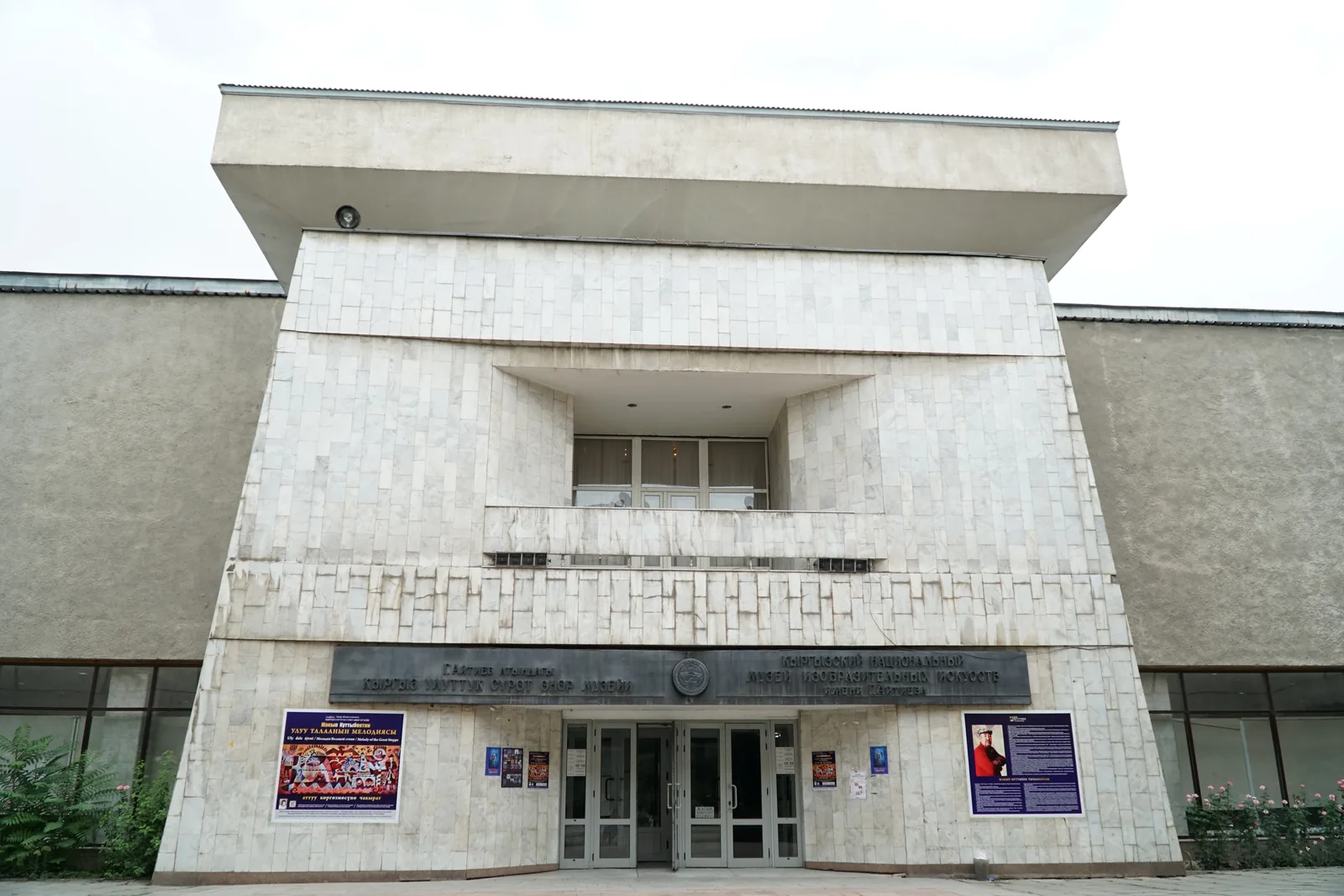
The Gapar Aitiev Kyrgyz National Museum of Fine Arts at 196 Abdrakhmanov Street is the better choice when you want to see how Kyrgyz artists turned local traditions into painting, sculpture and design. The museum's collection covers embroidery, felt work, wood carving, patterned weaving, leather embossing and jewellery alongside Kyrgyz painting, graphic art and sculpture and a Russian painting collection. Start with the decorative-applied rooms to see the materials themselves, then move to the painting galleries, where official material discusses Kyrgyz artists such as Semyon Chuikov, Gapar Aitiev and Sabyrbek Akylbekov.
Choose Fine Arts over the History Museum when visual culture will hold your attention longer than a chronological national story. Reserve 1½–2 hours and compare the craft materials with the painting and sculpture rooms; choose by the collection’s themes, as individual works on display change. The municipal listing gives Tuesday–Sunday, 10:00–18:00, and Ticket.kg currently shows an adult example at 40 KGS with separate student and school rates.
Add Victory Square for memorial architecture
Victory Square is a 1985 Second World War memorial built around three sweeping arches that evoke a yurt and its tunduk, an eternal flame and the sculptural figure of a mourning mother. The surrounding compositions show returning soldiers and civilians, turning the square into a concise explanation of how the city remembers the war rather than another photo stop.
Allow 20–30 minutes plus the walk or a short ride. It earns the extra distance on a second city day, or on a first day when Soviet memorials and public architecture are a priority. With only one day, keep the compact Ala-Too–museum–Oak Park route and leave Victory Square out.
Make Kyrgyz food part of your city day
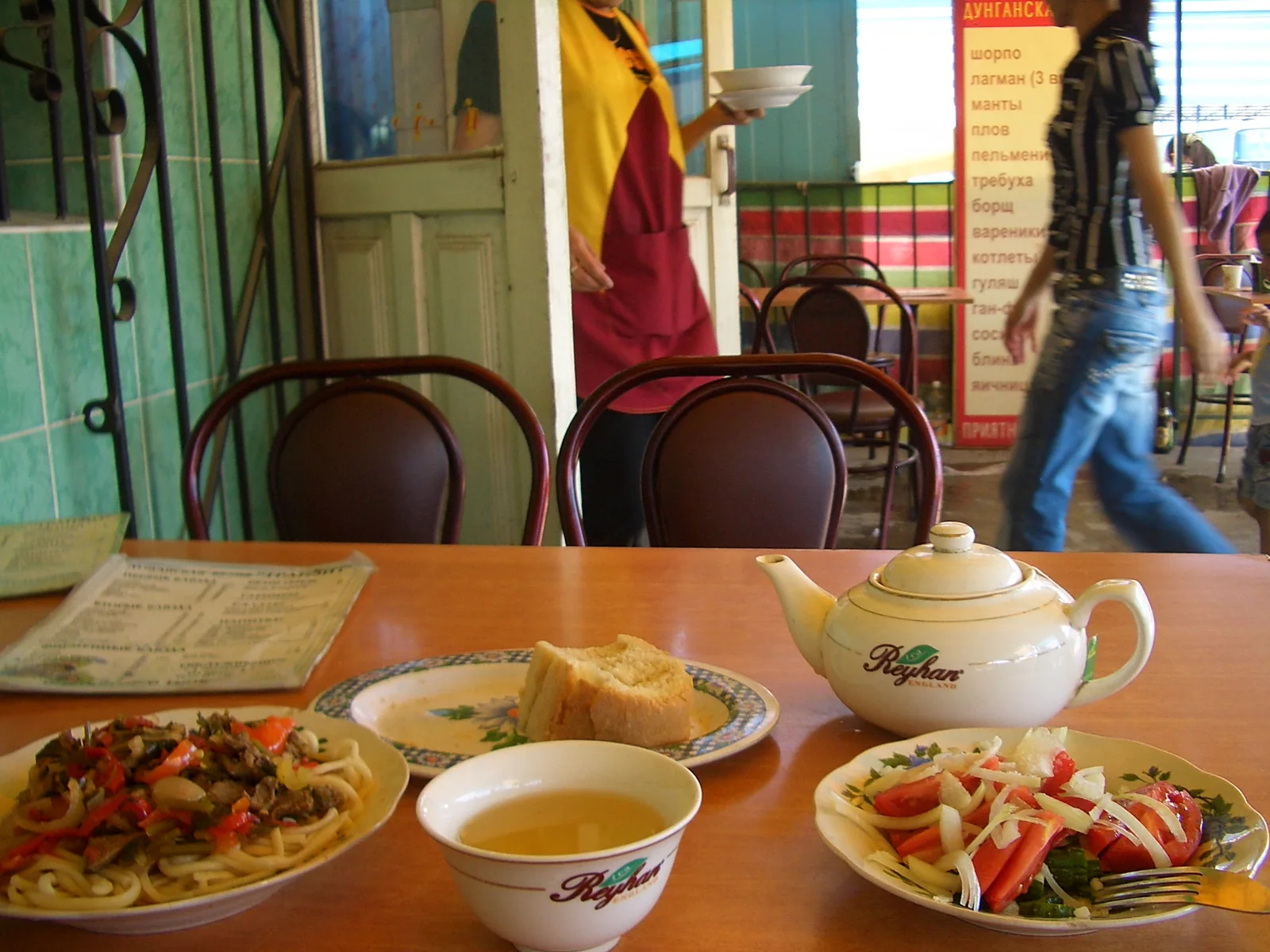
Laghman is a filling bowl of pulled noodles with meat and vegetables, manti are steamed dumplings usually filled with meat and onion, and plov is rice cooked with carrots, onion and meat. They are substantial lunch choices after a museum; order a smaller portion or share if you want room for a second stop. Beshbarmak, boiled noodles with meat and broth, is another traditional dish when it appears on the menu, but it is a larger, slower meal.
For the first-day route, NAVAT TSUM Aichurek is on the sixth floor of TSUM at 155 Chuy Avenue. Its official branch listing gives 10:00–22:00 and a children's playground; the first-party English menu covers laghman, manti, plov, soups and teas.
The mapped pedestrian route is about 1.1 km (15 minutes) from the History Museum to TSUM, then about 800 m (10–12 minutes) back west to Oak Park. Going straight from the museum to the park takes about five minutes, so the lunch stop adds roughly 20–25 minutes of walking, plus time to reach the sixth floor. These are map-based estimates, before traffic-light waits. NAVAT is worth that detour when you want a substantial meal with a readable English menu; for a quick lunch, stay near the square and continue directly to the park.
Faiza is the more casual alternative, with official branches at 159 Mederova Street and 555 Zhibek Zholu Street. The Mederova branch makes sense on a southern-side day rather than as a lunch detour from Ala-Too Square.
Most of these dishes are built around meat or broth. If you eat vegetarian, ask the branch to identify a dish by ingredients and preparation instead of assuming that a vegetable garnish makes a main course meat-free.
Keep Frunze House Museum for a specialist history day
The M. V. Frunze House Museum at 364 Frunze Street preserves the small house where the military and political figure Mikhail Frunze was born, inside a later 1967 museum building. The municipal page describes more than 13,000 objects, including personal belongings, documents, photographs, weapons, furniture and household items from the nineteenth and early twentieth centuries.
This is a focused Soviet and biographical visit, not a replacement for the National History Museum. Allow about an hour when that subject interests you; the city listing gives Tuesday–Sunday, 10:00–18:00. Add it to a third city day or pair it with Oak Park and Victory Square rather than squeezing it into a first-day museum circuit.
Osh Bazaar: a western-side market outing
Go to the established Osh Bazaar west of the centre for food shopping and market browsing. Allow 60–90 minutes on a second city day; it is a separate outing from the square–museum–park walk. The market area lies between Kievskaya, Beishenalieva, Kulieva and Toktogul streets. Check the working entrance and opening hours before setting out, and use the shopping and souvenir guide for felt gifts and food purchases.
Use the established city market for this visit. City Hall documented trading there on 14 October 2026, while September and October reports described the replacement site as under construction. Switch to a new site only after an opening announcement and current entrance directions.
Give Ala-Archa its own full day
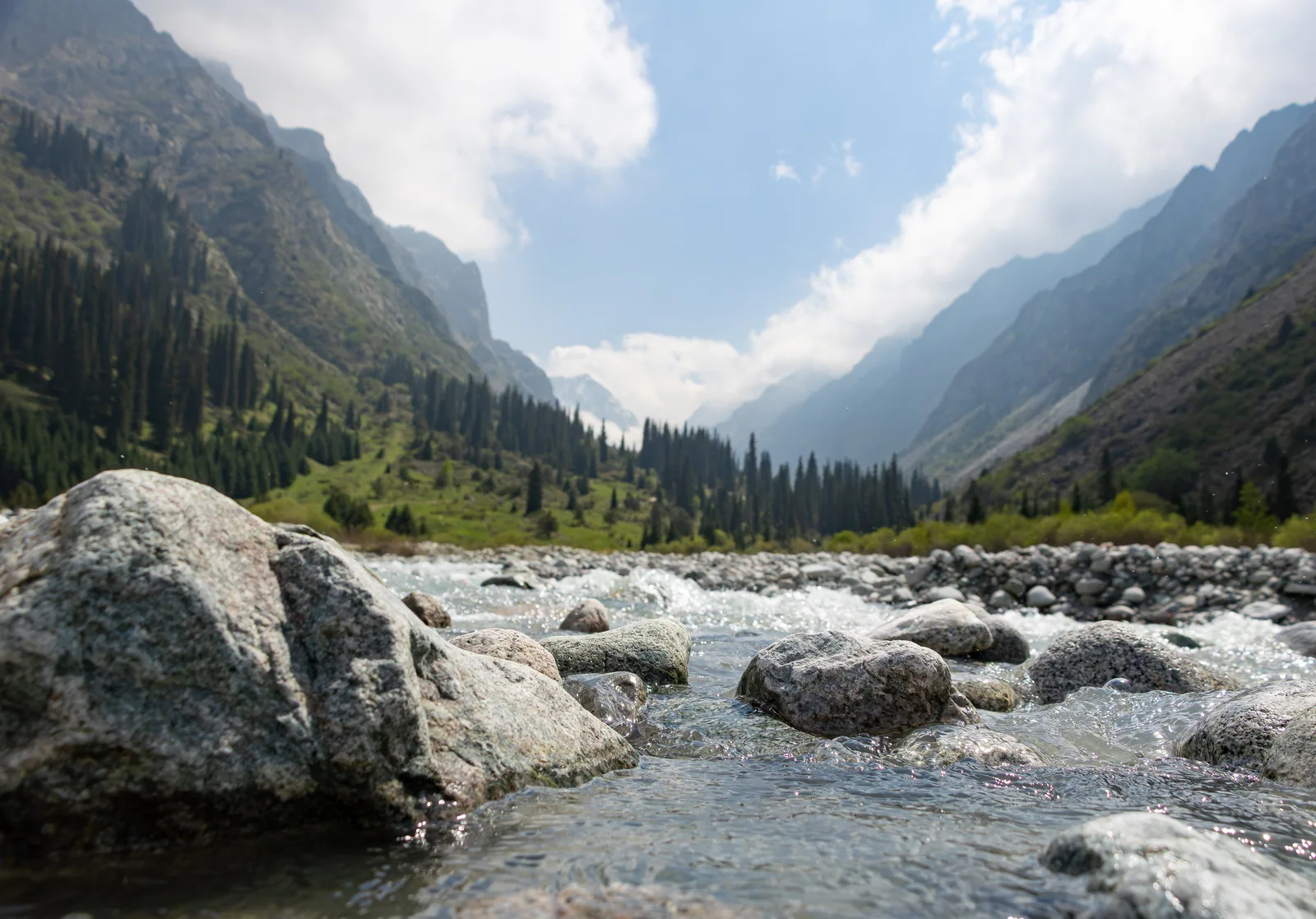
Choose Ala-Archa for mountain scenery when it matters more than another city museum. Visit Silk Road Places puts the park about 40 km south of Bishkek and describes easy valley walks and demanding routes, so the experience can match your group.
Use the Ala-Archa gate, shuttle and return plan for the access chain. The selected GetYourGuide walking option bundles hotel pickup, a guide, admission and park shuttle; the separate cable-car listing is a panoramic experience with an easy walk. For the Ak-Say waterfall hike, use the independent route in the day-trip guide.
Prioritise the route that matches your time
With one day, do Ala-Too Square, one museum, lunch, Oak Park and Erkindik. With two days, keep that city route intact and give Ala-Archa a separate day. With three, choose Victory Square and Frunze for more history or Osh Bazaar for shopping and food; each deserves its own route rather than a crowded afternoon.
Museum visits work best Tuesday–Sunday under the current municipal listings. Put the indoor anchor on an open day, then let the outdoor route and meal fill the edges. The itinerary guide turns the same priorities into 1, 2, 3, 5 and 7-day plans; the longer options extend into the region rather than adding minor city stops, so use that link when you are ready to choose a regional overnight.
View route map
Visual planning
A central Bishkek walking route
Group the civic square, one museum, Oak Park, Erkindik and the optional memorial stops in one central area. The map is geographic; walking times still depend on entrances, meals and road crossings.
The interactive map uses OpenStreetMap data.
Open this area in OpenStreetMap ↗- 1Ala-Too SquareManas statue, flagpole and civic centre
- 2History MuseumNational history, ethnography and culture
- 3Oak ParkOutdoor sculpture and shade
- 4Fine Arts MuseumPainting, sculpture and applied art
- 5Frunze House MuseumSpecialist biographical and Soviet-history stop
- 6Victory SquareSecond World War memorial