Print and pack
Bishkek packing checklist
Tick only what matches your route. The list saves its state in this browser and can be printed before departure.
Pack for the route you actually chose
A city break needs comfortable walking clothes and a small day bag; an Ala-Archa day adds grip, warmth, water and weather protection. Start with the route you actually booked, then add only the seasonal or mountain module it uses.
Keep expedition equipment off a city-only packing list. Overnight trekking, climbing and horse-riding trips have their own operator lists; use those when the route goes beyond a non-technical day walk.
Build the city kit around long walking days
Take shoes you can walk in for several hours, light layers, a weather-resistant outer layer, a small daypack that closes, a reusable bag, water, sun protection and the phone charger your route needs. Keep the accommodation address and map pin offline so the return does not depend on a data signal.
In July and August, prioritise shade, a bottle and sun protection; in November–March, add warmth and make the museum the anchor. Spring and autumn reward layers that can come off during a long indoor stop.
Pack the documents and payment backups the route depends on
Carry your passport and the documents that apply to your nationality and route, with offline copies stored separately. Save flight details, Agoda and tour confirmations, insurer contacts and the accommodation address where you can retrieve them without a connection.
Buy and fund Tulpar before your first bus, and keep a second payment method for taxi, museum and guide costs. Hotel, airport taxi, museum and guide payment can follow different rules, so check the payment method for each booking. Use the practical steps to buy and fund Tulpar before boarding.
Add the Ala-Archa day-walk module
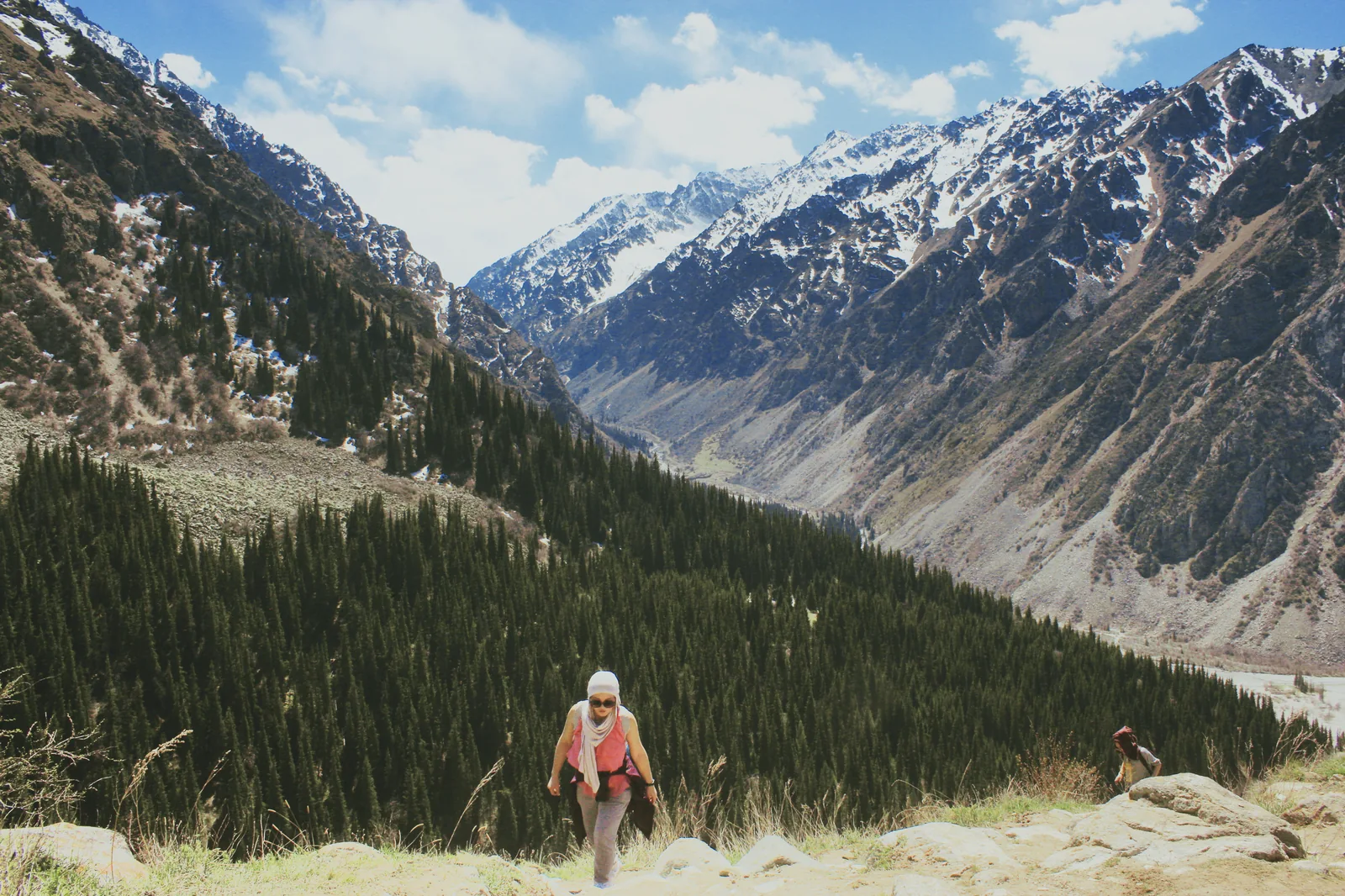
Pack waterproof protection, a warm layer, food, enough water, sun protection, a charged phone with an offline map and a small headlamp for any Ala-Archa walk, including the lower valley. The easy route is shorter, but it uses the same mountain access and return transfers; keep rain protection and navigation in your bag for either walk.
Choose sturdy footwear with grip, spare socks, and more food and water for Ak-Say's roughly 8.6 km return and +700 m ascent than for the 2–3-hour valley outing. Higher paths can hold summer snow; technical or snow-covered terrain requires a different route and activity plan, not just another layer.
Keep power and arrival information usable offline
Kyrgyzstan uses Type C and Type F sockets with a 230 V / 50 Hz supply. Take an adapter when your plug needs one and check that chargers accept 100–240 V before packing a converter. A power bank and the correct cable are more useful than duplicate gadgets.
O! says foreign visitors can obtain an eSIM or physical SIM with a passport, with eSIM activation completed after the device connects to a Kyrgyz network. Save the airport transfer plan, hotel address and map before leaving the terminal.
Pack medication and cover for the activity you will do
Keep regular medication in its original packaging with the documentation your route requires. FCDO advises checking with the relevant embassy because a medicine available without prescription at home may be restricted in Kyrgyzstan.
Choose insurance that covers the planned mountain or riding activity and emergency transport, then save the assistance details and Kyrgyzstan’s 112 emergency number offline. Carry a small first-aid kit suited to the walk alongside those assistance details.
Store the main bag for a regional loop
For the five- and seven-day routes that return to Bishkek, arrange suitcase storage with the hotel where you will stay again. Take a smaller bag for the village and lake nights, with medication, documents, overnight clothes and the mountain kit. Get the storage arrangement before leaving the city so you know where the bag will be when you return.